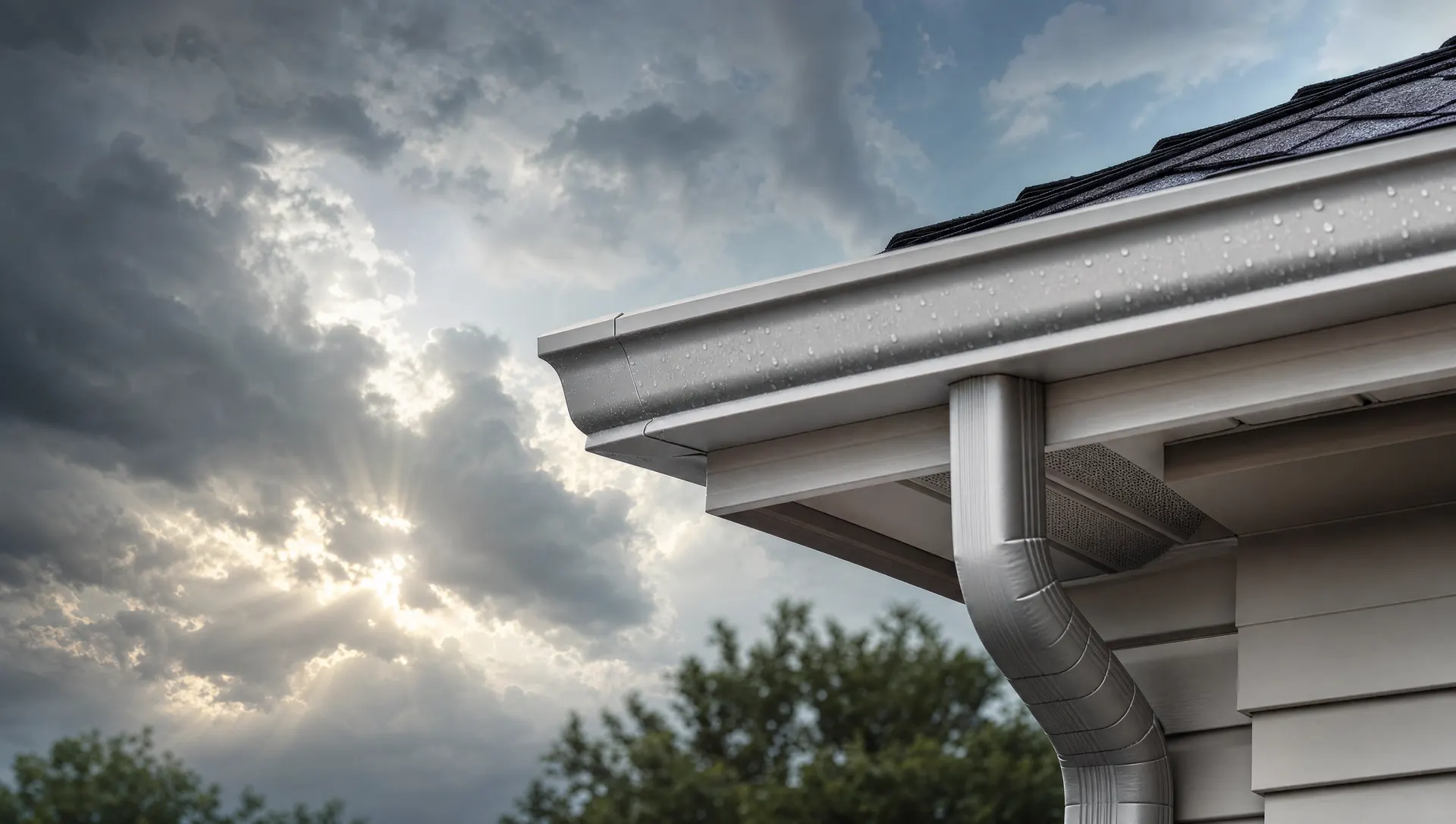
Downspouts & Drainage in Farmington, MO
A gutter system can capture every drop of water off a roof perfectly and still cause damage, if the downspouts dump that water two feet from the foundation instead of carrying it away. Gutters and drainage get talked about as one topic, but they're really two separate jobs — collecting the water, and then getting it far enough from the house that it stops being your problem. Farmington Gutters handles the second half: downspout placement, extensions, and drainage solutions that move roof water to where it should actually go.
What's Included
Downspout and drainage work covers several related pieces, and which ones apply depends on your property:
- Downspout sizing and placement — calculated from roof area rather than just matched to whatever was there before, since undersized or poorly placed downspouts overflow even when the gutters themselves are working fine
- Downspout extensions — rigid or flexible extensions that carry discharge water well clear of the foundation instead of letting it drop straight down at the wall
- Buried drain lines — underground pipe that routes water from the downspout base to a discharge point elsewhere on the property, useful where surface extensions aren't practical or attractive
- Pop-up emitters — the outlet end of a buried line, designed to release water at ground level away from the house while staying flush with the lawn the rest of the time
- Splash blocks — a simpler option for directing water at the point where a downspout meets the ground, appropriate for some situations and not others depending on grading
- Grading review — checking whether the ground near your foundation actually slopes away from the house, since even a perfectly placed downspout can't overcome a yard that slopes toward the wall
Why Drainage Matters More on Farmington's Terrain
This part of St. Francois County sits in the foothills of the St. Francois Mountains, and that geography shows up directly in how water behaves around a house. Lots here have more slope variation than you'd find on flat ground — a yard that looks level standing in it can still carry a noticeable grade toward or away from the foundation. On a lot that slopes toward the house even slightly, a downspout discharging too close to the wall sends water exactly where gravity was already going to take it anyway, compounding the problem instead of solving it.
Soil plays a role too. Much of the ground through this part of the Ozark foothills is rocky and clay-heavy, which drains more slowly than sandy or loamy soil. Water that pools near a foundation on clay-heavy ground doesn't soak in and disappear the way it might elsewhere — it sits, saturates the soil against the foundation wall, and over time that saturation is what leads to basement seepage, cracked foundations, and settling.
Add Missouri's spring storm pattern into the mix — heavy rain arriving in short, intense bursts rather than spread evenly over a day — and a downspout system has to move a lot of water quickly during exactly the events when poor drainage does the most damage. We see this pattern across Farmington and out into Park Hills, Desloge, Bonne Terre, and the more rural parts of the county, where lot grading varies even more than it does in town.
When to Call
A few signs point toward a drainage problem worth addressing:
- Water pooling near the foundation after rain, or a consistently damp basement wall
- A downspout that discharges directly onto a walkway, driveway, or right next to the house
- Soil erosion or a visible channel worn into the ground where a downspout empties
- A yard that slopes toward the house rather than away from it
- Recurring water in a crawlspace after storms, even when the gutters themselves are clear and working
If your gutters are overflowing rather than draining properly in the first place, that's more likely a capacity or clog issue — see gutter cleaning & repair or seamless gutter installation depending on the cause.
What Downspout & Drainage Work Typically Costs
Cost varies more here than almost any other gutter-related service, since the right fix depends entirely on the specific drainage problem:
- Downspout extensions are the least expensive fix, typically a modest cost per downspout for a basic rigid or flexible extension.
- Buried drain lines run by the linear foot, with cost driven by pipe length, depth, soil conditions, and whether the line has to route around landscaping, walkways, or other obstacles.
- Pop-up emitters add a modest cost per unit on top of a buried line, but make a meaningful difference in keeping the discharge point looking clean and mowable.
- Regrading near the foundation, when the underlying issue is a yard that slopes the wrong way, is typically the most involved and most expensive fix, but sometimes the only one that actually solves the problem long-term.
We look at where water is actually causing a problem — not just where a downspout happens to be — before recommending a fix, since the cheapest option isn't always the one that solves it.
How far from the house should a downspout discharge?
At minimum, 4 to 6 feet from the foundation, and further is generally better, especially on sloped or clay-heavy ground. A downspout extension that ends right at the edge of a walkway or 3 feet out is better than nothing, but it's not doing the full job. If the natural grade near your house is a concern, a buried line to a discharge point well away from the foundation is usually worth the extra cost.
Can a buried drain line get clogged?
Yes, though less often than a surface extension gets kicked out of place or damaged by mowing. Leaves, sediment, and small debris can accumulate in a buried line over time, particularly at low points or bends. A cleanout access point at the downspout connection makes clearing a clog far easier if it happens, and we build that in as standard on buried line installations.
Will a downspout extension damage my lawn?
A properly installed extension or buried line shouldn't cause lasting damage — buried lines are trenched in and the ground settles back over them within a season, and surface extensions can be removed or repositioned for mowing if needed. The bigger risk to a lawn is actually the opposite problem: water pooling repeatedly in the same low spot because drainage wasn't addressed, which kills grass and erodes soil far more than a well-placed drain line ever would.
Get a Free Quote
If water is pooling somewhere it shouldn't, tell us what you're seeing and where, and we'll get back to you fast with a free quote on getting it moving away from your house instead.
Gutters Overflowing in Farmington?
Tell us what's going on and we'll get back fast with a free, no-pressure quote.